SECTION

Arts & Humanities

Literature, art, history, and the enduring expressions of human creativity

14 articles
FEATURED
The Neuroscience of Beauty
Arts & Humanities

The Neuroscience of Beauty

Why Certain Art Moves Us to Tears

What happens in the brain when we encounter a piece of music that makes us shiver, or a painting that stops us in our tracks? Neuroaesthetics is beginning to reveal the neural architecture of aesthetic experience, with surprising implications for our understanding of art, emotion, and human nature.

Yuki Tanaka·March 3, 2026·12 min read
ALL ARTICLESPage 1 of 2
Showing 112 of 13
Lost Languages
Arts & Humanities

Lost Languages

Of the approximately 7,000 languages spoken today, more than half are expected to disappear by the end of this century. With each language that dies, humanity loses a unique way of understanding the world — and a repository of knowledge accumulated over thousands of years.

Ingrid Larsson·12 min read
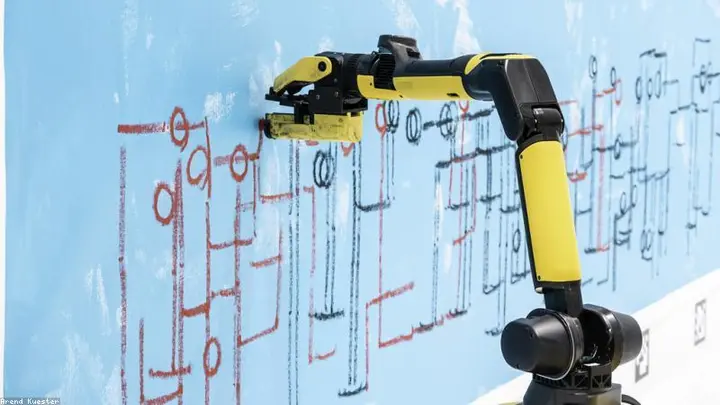
The Algorithm and the Artist
Arts & Humanities

The Algorithm and the Artist

AI systems like DALL-E, Midjourney, and Stable Diffusion can now generate images that are indistinguishable from human-made art. The technology raises profound questions about the nature of creativity, the value of human artistic labor, and the future of the art world.

Claire Bishop·8 min read
The Streaming Paradox
Arts & Humanities

The Streaming Paradox

Streaming has transformed how we listen to music, making virtually all recorded music available for a monthly subscription fee. But the economics of streaming are brutal for most musicians: Spotify pays approximately $0.003-0.005 per stream, meaning a million streams earns about $3,000-5,000. The streaming revolution has been great for listeners and terrible for most artists.

Simon Frith·8 min read
Building for the Anthropocene
Arts & Humanities

Building for the Anthropocene

Buildings account for approximately 40% of global energy consumption and 33% of greenhouse gas emissions. Architecture is both a major contributor to climate change and a potential solution. A new generation of architects is designing buildings that generate their own energy, use sustainable materials, and adapt to a changing climate.

Jeanne Gang·7 min read
The Novel in the Age of Distraction
Arts & Humanities

The Novel in the Age of Distraction

Book sales have declined, attention spans have shortened, and the competition for readers' time has never been more intense. Yet literary fiction continues to find audiences, and some argue that the novel is more important than ever as a form of deep engagement in an age of distraction. The future of literature is uncertain but not hopeless.

James Wood·8 min read
The End of Cinema?
Arts & Humanities

The End of Cinema?

The COVID-19 pandemic accelerated a transformation that was already underway: the shift from theatrical to streaming distribution. Netflix, Amazon, and Apple are now major film studios. The theatrical window has shrunk. And the experience of watching a film in a darkened room with strangers is becoming rarer. What does this mean for cinema as an art form?

A.O. Scott·8 min read
Whose Culture Is It?
Arts & Humanities

Whose Culture Is It?

Museums in Europe and North America hold millions of objects taken from colonized peoples during the era of empire. A global movement is demanding their return. The debate over repatriation is not just about objects — it is about history, justice, and the meaning of cultural heritage.

Kwame Anthony Appiah·8 min read
The Photograph That Never Was
Arts & Humanities

The Photograph That Never Was

Photography has always been considered the most truthful of the visual arts — the camera doesn't lie. But AI image generation has made it trivially easy to create photorealistic images of events that never happened. The implications for journalism, politics, and our shared sense of reality are profound.

Hany Farid·8 min read
The Invisible Hand of Design
Arts & Humanities

The Invisible Hand of Design

Design is everywhere — in the chair you sit on, the app you use, the street you walk down. Most of it is invisible, shaping our behavior and emotions without our awareness. Understanding how design works, and how it can be used for good or ill, is one of the most important challenges of the 21st century.

Don Norman·8 min read
Lost and Found in Translation
Arts & Humanities

Lost and Found in Translation

Only about 3% of books published in English are translations. This "translation gap" means that English-language readers are missing out on vast swaths of world literature. A new generation of translators and publishers is working to change this — but the economics of translation are challenging, and questions about who translates what remain deeply contested.

Edith Grossman·9 min read
The Art That Owns the Street
Arts & Humanities

The Art That Owns the Street

Street art — once dismissed as vandalism — has become one of the most significant art movements of the 21st century. From Banksy's politically charged stencils to the elaborate murals of the Los Angeles arts district, street art has transformed public spaces and challenged the boundaries between high art and popular culture.

JR·9 min read
The Design of Everything
Arts & Humanities

The Design of Everything

Design is everywhere — in the chair you're sitting on, the phone in your pocket, the cup you drink your coffee from. Good design is invisible: it works so well that we don't notice it. Bad design is painfully obvious. Understanding the principles of good design can help us appreciate the designed world around us — and demand better.

Don Norman·9 min read